Native vs Cross-Platform Apps: Which Should You Choose in 2026?
By Delaine • June 17, 2026
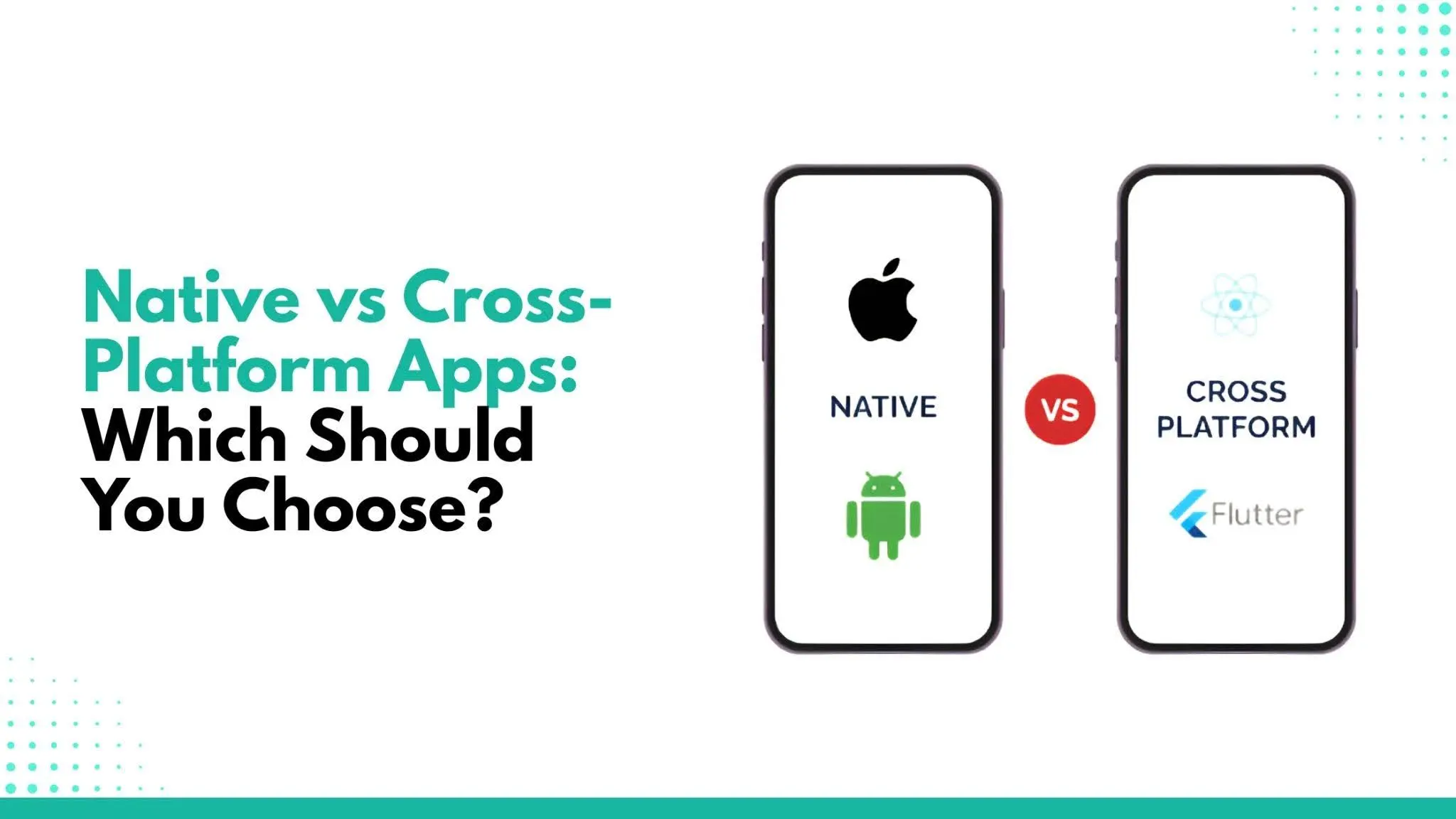
Native vs Cross-Platform Apps: Which Should You Choose in 2026?
A mobile app often looks simple from the customer's side.
Open the app. Search for a product. Book a slot. Track an order. Pay. Leave a review. Done.
Behind that small screen, however, sits a decision that can shape the cost, speed, performance and future of the entire product: should the business choose native app development or cross-platform app development?
This is not a small technical preference. It is a business decision disguised as a technology question. A luxury retail brand launching an e-commerce app in Dubai, a healthcare platform managing appointments in London, a real estate company listing properties in New York, and a logistics business tracking deliveries in Riyadh may all need apps. But they do not need the same kind of app.
That is where the confusion begins.
The Problem: Businesses Often Choose the Framework Before Defining the Product
Many app conversations start with one question: "Should we build native or cross-platform?"
It sounds practical, but it usually comes too early.
The better question is: "What does this app need to do, and what can never afford to fail?"
A fintech app cannot treat security as a side feature. A delivery app cannot treat location tracking casually. A fashion app cannot ignore browsing speed, product discovery and checkout flow. A healthcare app cannot be careless with data privacy. A restaurant app cannot make ordering feel like paperwork.
This is why the native vs cross-platform apps discussion should never be reduced to one winner. Native is not automatically superior. Cross-platform is not automatically a compromise. Each approach has a clear place, and the right answer depends on the product's purpose, users, budget, timeline and growth plans.
What Native App Development Means
Native app development means building separate apps for iOS and Android. The iOS app is usually built using Swift or SwiftUI. The Android app is commonly built using Kotlin and Android's modern development tools.
Native gives developers deeper control over platform-specific features. The app can make better use of the phone's camera, GPS, Bluetooth, NFC, biometrics, sensors, background activity, notifications and platform-level security.
This matters when the app's performance is part of the product promise.
Take a banking app. Users expect secure login, instant transaction alerts, biometric authentication, smooth transfers and zero confusion during payments. If a payment screen freezes, trust drops immediately. A trading app has similar pressure. A one-second delay can feel unacceptable when users are watching market movement.
A fitness app that tracks steps, heart rate, sleep, routes and wearable data may also benefit from native development. So can a delivery driver app where GPS accuracy, battery usage and background updates affect real operations.
Native makes sense when the phone is not just displaying information, but actively doing heavy work.
What Cross-Platform App Development Means
Cross-platform app development allows developers to build apps for both iOS and Android with a largely shared codebase. Flutter and React Native are two popular frameworks in this space.
This approach is attractive because businesses can reach users on both platforms faster, often with better cost control. It also makes future updates easier in many cases because the team does not need to build every feature twice.
A grocery delivery app, salon booking app, fashion ecommerce app, restaurant ordering app, learning platform, real estate listing app, customer loyalty app or internal employee portal can often work very well with cross-platform development.
For example, a beauty brand selling across the UAE, UK and USA may need product pages, filters, cart, checkout, payment gateways, wishlists, push notifications and order tracking. These features are important, but they do not automatically demand two separate native apps.
A clinic booking app may need patient profiles, appointment slots, reminders, doctor listings and secure forms. A property app may need search filters, maps, saved listings, image galleries and enquiry forms. These are strong use cases for Flutter app development or React Native app development, provided the backend and user experience are planned properly.
Cross-platform is not a shortcut when handled well. It is a practical development strategy for many modern business apps.
Native vs Cross-Platform Apps: Quick Business Comparison
| Factor | Native Apps | Cross-Platform Apps |
|---|---|---|
| Development speed | Slower because iOS and Android are built separately | Faster because much of the code is shared |
| Cost | Usually higher for the first version | Often more efficient for MVPs and business apps |
| Performance | Best for complex, device-heavy apps | Strong for most standard business apps |
| User experience | More platform-specific | More consistent across platforms |
| Maintenance | Separate updates for each platform | Shared updates for many features |
| Best fit | Fintech, gaming, AR, hardware-heavy apps, advanced tracking | E-commerce, booking, education, SaaS, food ordering, internal tools |
The Agitation: The Wrong Choice Becomes Expensive Quietly
A poor app development choice does not always fail loudly. That is what makes it dangerous.
The first version may look fine. The screens may open. The buttons may work. The launch may even feel successful.
Then the business grows.
The e-commerce team wants loyalty points. Then Arabic and English language support. Then regional payment methods. Then abandoned cart notifications. Then live order tracking. Then personalised recommendations. Then a seller dashboard. Then advanced analytics.
The original decision suddenly starts showing its weight.
If a business chooses cross-platform for an app that depends heavily on advanced native features, developers may spend too much time building bridges and handling platform-specific issues. The single-codebase advantage becomes weaker.
If a business chooses native for a fairly standard booking, ecommerce or content app, the company may spend more than needed. Every new feature needs separate iOS and Android development, separate testing and separate release coordination.
One mistake creates technical stress. The other creates budget stress.
Both affect growth.
When Should You Choose Native?
Choose native when the app depends on high performance, strong security, platform-specific behaviour or heavy device access.
A fintech app is one of the clearest examples. Payments, wallet features, biometric login, fraud alerts and sensitive customer data need a strong technical foundation. Native may be the safer choice when trust is central to the business.
A logistics or ride-hailing app may also lean native, especially for the driver-side product. Continuous location tracking, route updates, background activity and battery optimisation can directly affect delivery accuracy and customer experience.
Healthcare apps can also fall into this category when they connect with wearables, medical devices or Bluetooth-based monitoring systems. The app is not simply showing appointment details. It is handling sensitive data and real-world signals.
Native is also a strong fit for gaming apps, AR experiences, advanced camera tools, audio editing apps, video creation platforms and any product where performance is not just nice to have, but central to user satisfaction.
When Should You Choose Cross-Platform?
Choose cross-platform when the app needs to launch across iOS and Android quickly, with good quality and controlled cost.
An e-commerce app is a strong example. Product catalogues, filters, cart, checkout, reviews, order history, offers and push notifications can usually be handled well through Flutter app development or React Native app development.
A restaurant or cloud kitchen app can also work well cross-platform. Menus, location selection, delivery tracking, discount codes, payments and customer reviews do not usually require deep native development.
Education apps are another strong use case. Recorded lessons, quizzes, progress tracking, certificates, subscription plans and notifications can be built efficiently with a cross-platform approach.
Internal business tools may be the most sensible use case of all. A sales reporting app, warehouse checklist, HR portal, field inspection tool or CRM companion app does not need to win design awards. It needs to work reliably, update easily and reduce manual work for the team.
For startups, cross-platform is often a smart first move. It helps the business launch, collect user feedback and improve the product before committing to heavier platform-specific investment.
Flutter vs React Native: How Should Businesses Think About It?
The choice between Flutter and React Native depends on the product and the team.
Flutter is often preferred when the business wants a polished, consistent interface across devices. It gives strong control over visual design, which is useful for consumer apps where the brand experience matters.
React Native is often preferred when the company already uses React or JavaScript for its web products. For teams with an existing web application, React Native can feel like a natural extension.
A retail brand may choose Flutter for a visually rich shopping experience. A SaaS company with a React-based web dashboard may choose React Native for its mobile companion app. A large enterprise may even use native for one part of the ecosystem and cross-platform for another.
Modern mobile app development does not need rigid thinking. It needs practical thinking.
What Happens to App Development Cost?
The app development cost depends on design, features, backend systems, admin panels, APIs, security, testing, third-party integrations and long-term maintenance.
Native apps usually cost more because two separate applications are being built and maintained. Cross-platform apps can reduce the first-version cost because a large part of the code is shared.
But cost should never be judged only at launch.
A badly planned cross-platform app can become slow, unstable and hard to maintain. A native app with unnecessary complexity can drain the budget before the business understands what users truly want.
A mature app roadmap usually works better than a rushed quote. It defines the first version clearly, keeps future features in view and avoids building technology for imaginary problems.
The Solution: Choose Based on the App's Real Job
The decision becomes easier when businesses stop asking what sounds better and start asking what the app must survive.
If the app needs advanced performance, security, hardware access, real-time tracking, AR, gaming-level responsiveness or deep operating system control, native deserves serious attention.
If the app is focused on ecommerce, bookings, education, content, food ordering, lead generation, customer loyalty, SaaS access or internal workflows, cross-platform may be the better starting point.
A delivery company may build the customer app cross-platform and the driver app native. A retail brand may begin with Flutter and keep improving features as sales grow. A fintech company may choose native from day one because trust cannot be treated as an experiment.
There is no universal winner in native vs cross-platform apps.
There is only the right fit for the product.
Final Word
Choosing between native and cross-platform app development is not about following the louder opinion in the tech market. It is about understanding what the business is building, how users will behave and where the product needs strength.
Native gives businesses precision when the app depends on performance, security and device-level control. Cross-platform gives businesses speed and efficiency when the goal is to launch across iOS and Android app development without duplicating every effort.
For a business still comparing options, the next sensible step is not to pick a framework in isolation. It is to map the product, decide the first version, understand the user journey, and then choose the stack that can support both launch and growth.
Delaine Tech helps businesses make that decision with a clear app development roadmap. From Flutter and React Native to native iOS and Android builds, the team works on mobile products that need strong usability, clean architecture and long-term scalability. For teams planning a serious app in 2026, that kind of clarity can save far more than development cost. It can save months of rework.

Start your journey with Delaine
Join thousands of satisfied users and experience the power of our platform today.